Engineering notes.
Hygienic valve engineering from the Carson City workshop. Mechanisms, materials, standards, and process fundamentals.
Four pillars. One workshop.
Every note in the library falls into one of four categories · the way engineers actually organize what they need to know.
The pillar notes.
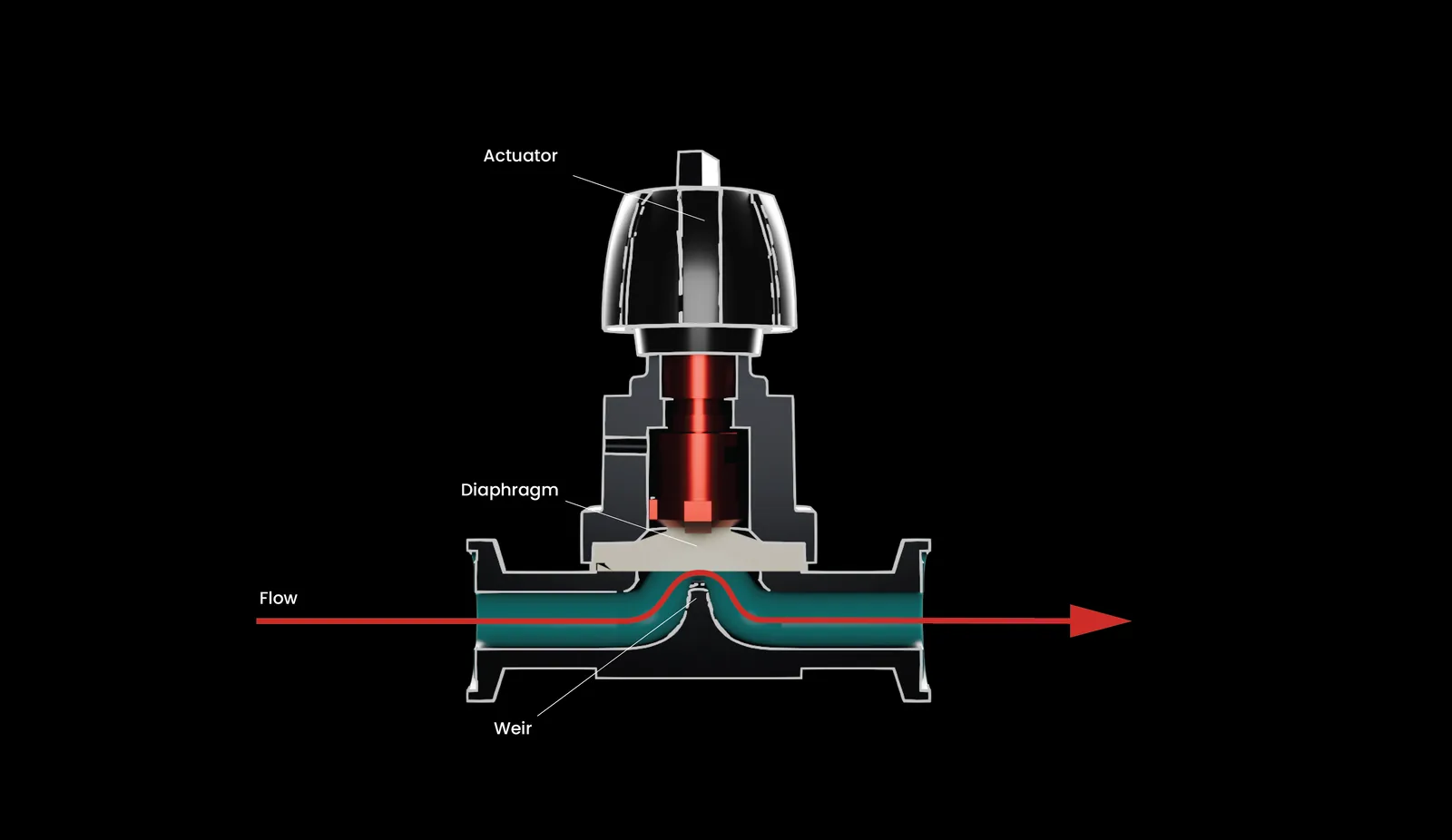
How diaphragm valves work.
The most common hygienic valve mechanism explained · weir geometry, how a diaphragm seals against it, what makes an Aquasyn body different from an industrial-adapted one. Where every spec conversation starts.
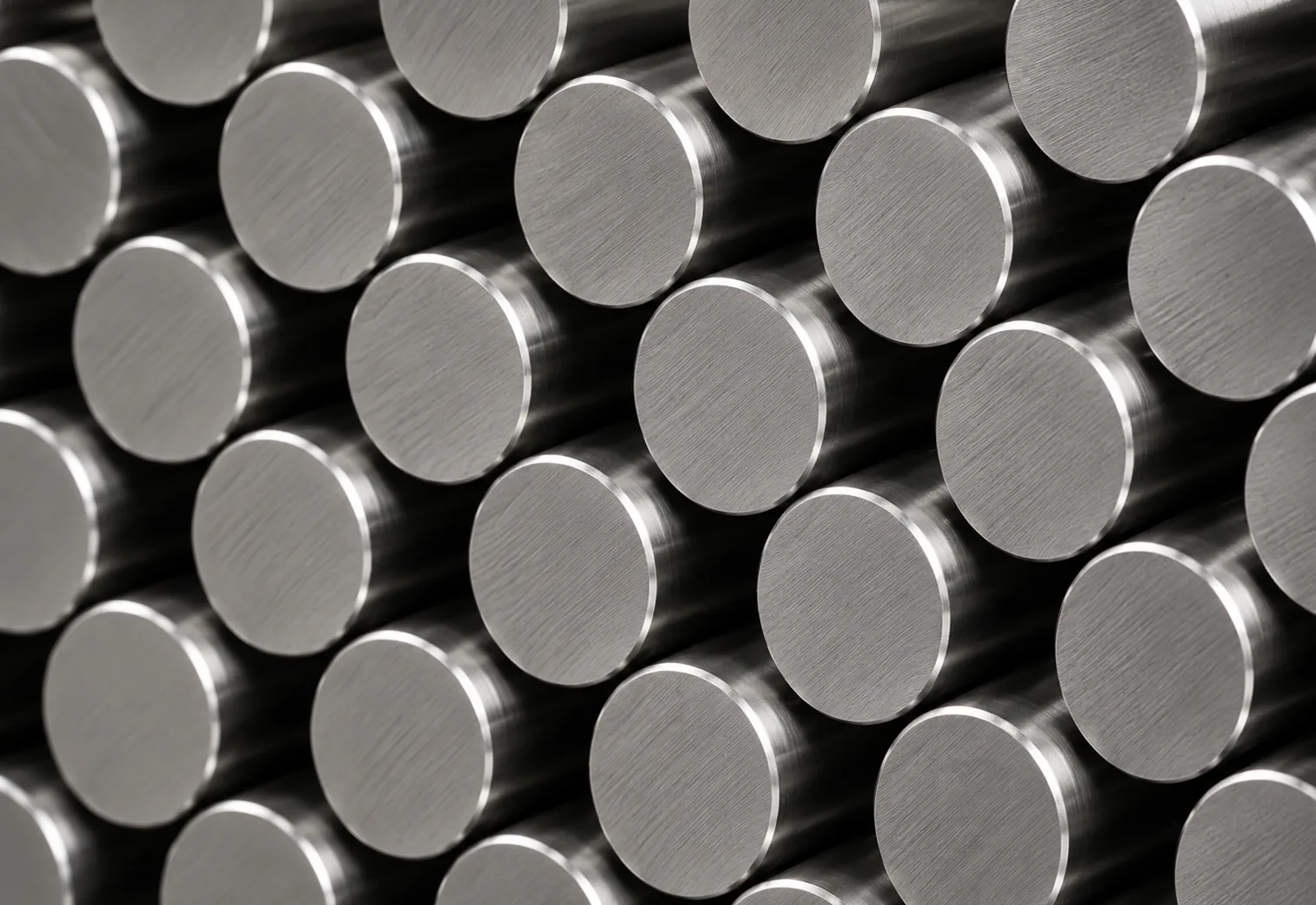
Bar stock vs castings.
Two ways to build a hygienic valve body · machined from solid 316L bar stock, or cast to shape. Bar stock is the Aquasyn default · zero porosity, mill-traceable heat number, chemistry controlled bar by bar. Cast bodies ship on request where the application allows. What the choice actually costs you at the audit.
What is ASME BPE?
The American Society of Mechanical Engineers Bioprocessing Equipment standard · scope, revisions, and what Aquasyn valves ship compliant with.
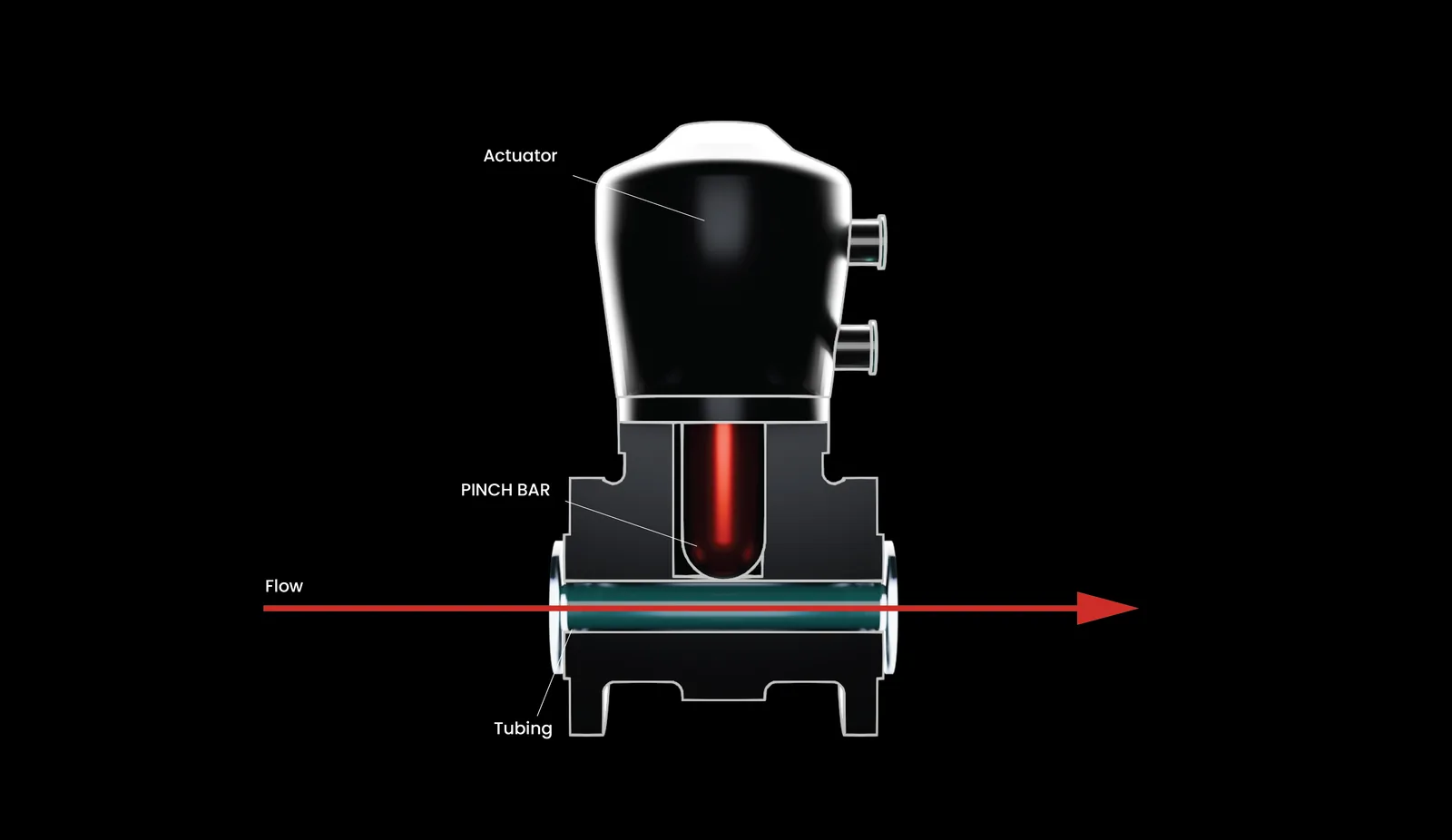
How pinch valves work.
ARTēVA® central-pinch mechanism explained · why the wear pattern is different from an off-center pinch and where it belongs in single-use bioprocessing.
Valve Engineering.
How diaphragm valves work
Weir geometry, how a diaphragm seals against it, and the mechanism that makes hygienic diaphragm valves the most common valve in bioprocess.
How pinch valves work
Central-pinch geometry, tubing selection, and where ARTēVA® belongs in single-use bioprocess vs a diaphragm valve.
Hygienic vs industrial valves
Why an industrial valve with a hygienic finish is not a hygienic valve · the geometry that separates the two categories.
Weir vs full-bore geometry
Which body geometry belongs where · when weir wins, when full-bore is worth the extra machining, and where Aquasyn draws the line.
Tork-Tite® Feet explained
The hard physical stop mechanism on Aquasyn bonnets · how it eliminates over-compression damage and why it enables one-turn closure.
Integral Sealing Ridge
The sealing ring machined into the valve body in a single 5-axis pass · zero entrapment, repeatable flow, and why the diaphragm flexes while the body seals.
Valbow® · integrated valve-elbow
One body, one seal, one weld eliminated · the geometry that turned a customer request into a patented category-of-one product.
Diaphragm material decision tree
EPDM vs PTFE-faced/EPDM (TFM 1700) vs Silicone vs Viton · when to spec each compound, chemistry compatibility, temperature limits.
Diaphragm material selection guide
USP Class VI, FDA 21 CFR 177.2600, ASME BPE, EN 10204 3.1 · what the certificates mean and why Aquasyn diaphragms carry all four.
Tank bottom closure interfaces
Welded Flange vs Tri-Tank · size ranges, drain angles per size, and how to spec the right closure for the vessel service.
Cv tolerance and flow control
Why the ±10% tolerance on published Cv values decides flow predictability in modulating service · and what Aquasyn actually holds to.
Pinch sleeve cycle life
The wear curve, the inspection criterion, and what determines whether a pinch sleeve is good for 10,000 cycles or 3 days continuous.
Materials & Manufacturing.
Bar stock vs castings
Why Aquasyn machines from bar stock and never from castings · porosity risk, heat traceability, and what audit trail requires.
What heat numbers trace
From the mill to the shipped part · what a heat number actually documents and why every Aquasyn valve carries one.
MTR EN 10204 3.1 explained
The four MTR grades, why 3.1 is the default on every Aquasyn valve, and what's actually in the documentation pack that ships.
Ra values and surface finish
What 5Ra, 10Ra, 15Ra, 20Ra, 25Ra actually mean · how the profilometer measures them, and which grade belongs in your service.
Four stages of valve interior finish
From mill finish to electropolished mirror · what happens at each stage and why the polish bay is the second most important room in the building.
Electropolishing process
What EP actually does to a stainless steel surface · chemistry, current density, and the difference between mechanical polish and EP at the same Ra.
Passivation and rouging
What passivation actually does to the surface · what actually forms on the surface, why rouge is not always a problem, and when it is.
Standards & Compliance.
What is ASME BPE?
The bioprocessing equipment standard explained · scope, revisions, surface finish grades, and what shipping ASME BPE-compliant actually means.
USP Class VI explained
The elastomer biocompatibility standard · what the six classes mean, why Class VI is the pharma default, and what the test protocol actually is.
3-A Sanitary Standards
The voluntary standard for hygienic equipment · what it covers, what the authorization numbers mean, and when a 3-A cert matters on your PO.
FDA 21 CFR 177.2600
The FDA regulation on rubber articles for repeated food contact · what Aquasyn's diaphragms comply with and why it matters beyond food service.
Documentation pack explained
What ships with every Aquasyn valve · MTR, weld log, weld map, profilometer readings, passivation cert, CoC. The paperwork nobody markets.
Annex 1 for hygienic components
The revised EU GMP Annex 1 · what it changes for sterile fill-finish spec, contamination control strategy, and where hygienic valves land in the CCS.
PMDA · MFDS · COFEPRIS · ANVISA
What Japan, Korea, Mexico, and Brazil regulatory agencies look for in hygienic component documentation · the plain-English version.
Process & Cleaning.
CIP explained
Clean-in-place fundamentals · temperature, chemistry, flow, and time. What CIP actually accomplishes and why valve geometry decides how well it works.
SIP explained
Steam-in-place · temperature, pressure, hold time, and what happens to a valve during the cycle. Why the submersible bonnet exists.
Dead-leg L/D ratio
The geometry that decides cleanability · what L/D means, why ASME BPE caps it, and where Zero Static Tee bodies eliminate it entirely.
WFI loop design basics
Point-of-use branches, dead-leg minimization, turnover velocity, rouging risk. Where hygienic valves sit in the loop and why they matter.
Sample bottle geometry
Why your sample is only as good as the bottle interface · how the Valbow®-integrated sample assembly eliminates the contamination modes off-the-shelf assemblies retain.
Continuous vs batch manufacturing
What changes for hygienic valve spec when the plant runs continuous instead of batch · cycle life, service intervals, actuation choice, tubing selection.
Written at the bench. Not the marketing desk.
Every note in this hub is written from the Carson City workshop by people who machine, weld, polish, and inspect the parts they're writing about. No marketing gloss, no CAD renders, no white-paper vocabulary. Engineer to engineer.
Publishing on a weekly cadence starting Q3 2026. Each note ships with a downloadable PDF for offline reading, and every claim gets fact-checked by shop-floor engineering before it goes live.
Send it to engineering.
If you're specifying a hygienic valve for a process we haven't written about yet, tell us. The next note might answer your question directly.