What a heat number traces, from the mill to your valve
A heat number identifies one batch of steel, melted together at the mill. Everything measured about that batch, its chemistry and its mechanical properties, is recorded against that number on the material test report. When the number follows the metal from the mill through bar stock, machining and welding to the finished valve, any component in your line can be linked back to a specific, tested melt of steel.
That chain is only as strong as its weakest link, though. This note covers what a heat number tells you, how it survives the trip from mill to valve, and what it doesn't trace.
What a "heat" is
Stainless steel is made in batches. Scrap and alloying elements are melted in a furnace, refined until the chemistry is right, and cast. Everything from one of those melts is one heat, and the mill gives it a unique heat number.
Because the whole batch was melted together, its chemistry is effectively the same throughout. So the mill tests samples from the heat, records the results, and those results stand for every bar, plate or tube made from it.
A single heat can produce many tons of product, which then spreads across distributors, machine shops and, eventually, thousands of parts. The heat number is what lets anyone, at any point along that path, find their way back to the original test results.
What the material test report records
The material test report (MTR) is the document the heat number points to. For a 316L product it typically records:
- Chemistry: the measured percentages of carbon, chromium, nickel, molybdenum, manganese, silicon, phosphorus, sulfur and nitrogen.
- Mechanical properties: tensile strength, yield strength, elongation and, often, hardness.
- The specification and grade it meets: for example a named ASTM product specification and UNS S31603 for 316L. Many products are dual-certified as 316/316L.
- Where it was melted and manufactured, which matters for some domestic-content requirements.
How much the report proves depends on its type. An EN 10204 3.1 inspection certificate reports results from the specific material delivered, validated by an inspector independent of manufacturing. The types are compared in The valve documentation pack.
How the number follows the metal
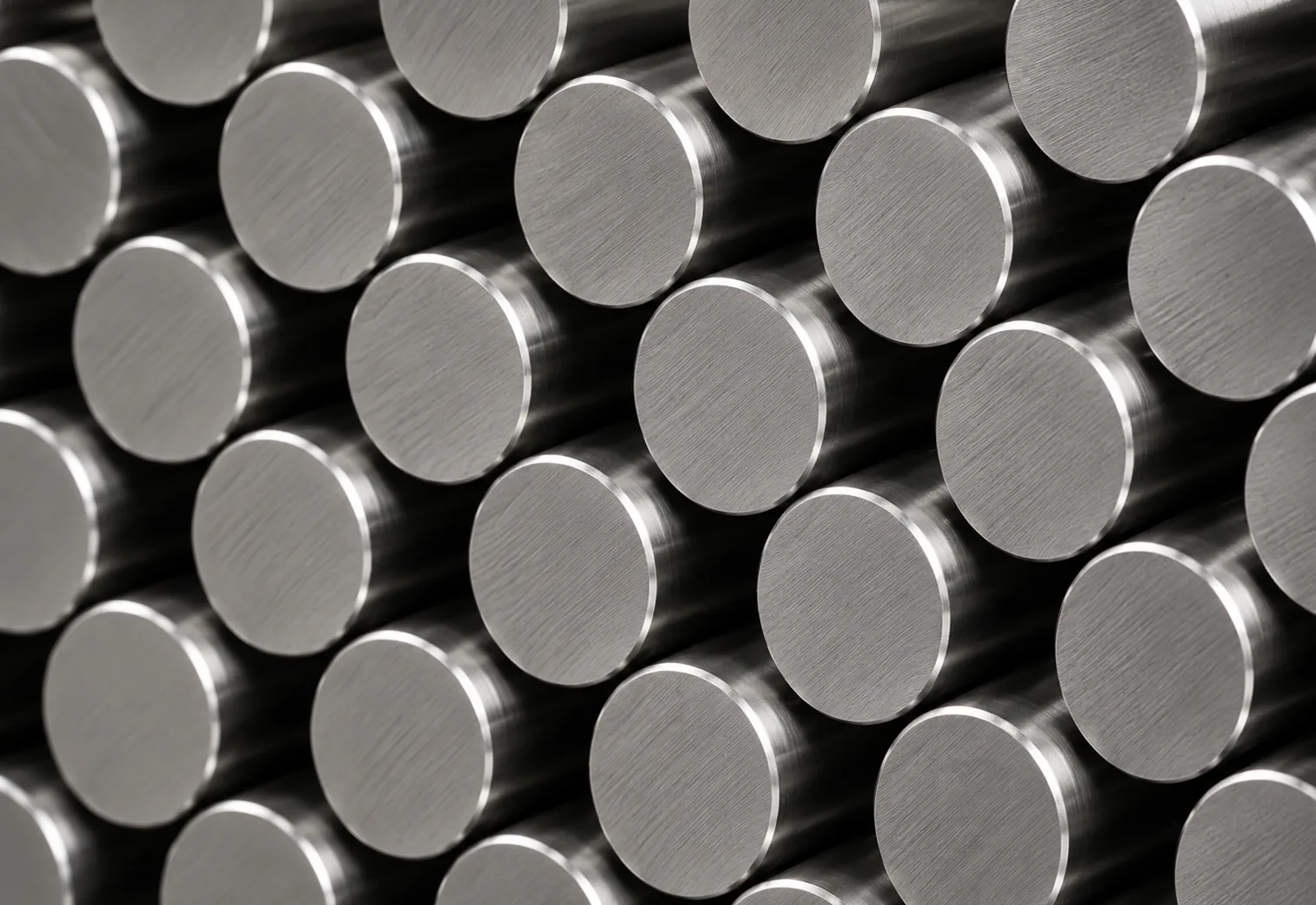
The heat number starts out marked on the mill product, usually stenciled, stamped or tagged on the bar. From there, keeping traceability is a matter of discipline at every step:
- Receiving: the shop checks that the heat number on the bar matches the number on the MTR that came with it.
- Cutting: when a bar is cut into blanks, the number has to transfer to each piece, or be recorded against it, before the marked end is machined away.
- Machining and finishing: the part's records carry the heat number through every operation, so the finished body can still be tied to its bar.
- Welding: each component in a welded assembly has its own heat number, and the weld records show which heats were joined.
- Shipping: the MTRs that go out with the valve are the ones for the heats actually used in it.
The weak point is almost always the transfer step. A bar that's been cut, with its marked end already scrapped, can't prove where it came from. That's why good shops treat the heat number as part of the part, not as paperwork that catches up later.
Why it matters in a hygienic system
Audits and qualification. Validation teams need to show that every product-contact component is the material it's specified as. Heat traceability turns "this valve is 316L" from a claim into a fact you can hand to an auditor.
Investigations. If corrosion or rouge turns up in a system, the first question is whether it's the material or the process. Traceability lets you check the chemistry of the exact heats involved, and find out whether other components from the same heat are installed elsewhere.
Welding. Small differences between heats, sulfur content especially, change how a weld pool behaves in orbital welding. Knowing the heats on both sides of a joint helps the welder set up the weld schedule, and explains a weld that doesn't behave as expected.
Replacement and change control. When a component is replaced years later, the heat records are what show the new part is equivalent to the old one.
What a heat number doesn't trace
A heat number traces the metal, and only the metal. It says nothing about:
- Surface finish. The Ra of a product-contact surface comes from machining and polishing, not from the heat. That has its own record.
- Weld quality. A traceable heat can still carry a poor weld. Weld logs, maps and inspection records cover that.
- Elastomers. Diaphragms and seals are traced by compound and batch, under certificates such as USP Class VI. No steel heat number applies.
- Bought-in components. Fittings welded into an assembly carry their own heat numbers and their own certificates, and each one needs to be on the paperwork.
Traceability is the start of the paper trail, not the whole of it.
Questions to ask a supplier
- Are the MTRs for the actual heats in my valves, or typical reports for the grade?
- What type of certificate is it: EN 10204 3.1, or a 2.2 test report?
- How is the heat number transferred when bar is cut into blanks?
- For welded assemblies, do the weld records show the heats on both sides of each weld?
- Can you trace a part I already have, from its serial or job number, back to its heat?
How Aquasyn handles it
Aquasyn machines its valve bodies from solid 316L bar stock sourced from US mills, so the trail starts at a documented heat (more on why in Bar stock vs castings). Every valve ships with EN 10204 3.1 material test reports traceable by heat number, as standard. Additional documentation, including surface finish certificates, welder certificates and weld logs and maps, is available on request at additional cost.
Frequently asked questions
What is a heat number?
A heat number is the unique identifier a steel mill gives to one batch of steel melted together. The batch's tested chemistry and mechanical properties are recorded against it on the material test report.
What does a heat number trace?
It traces the metal: which melt a component's steel came from, and that melt's measured chemistry and properties. It doesn't trace surface finish, weld quality or elastomers, which have their own records.
Where is the heat number on a material test report?
It's normally near the top of the MTR, alongside the product specification and grade. It should match the heat number marked on, or recorded against, the material supplied.
Why does heat traceability matter for hygienic valves?
It lets validation and audit teams prove that product-contact components are the specified alloy. It supports corrosion investigations, and it shows equivalence when parts are replaced.
Do welded fittings have their own heat numbers?
Yes. Each component in a welded assembly comes from its own heat and carries its own certificate, so every one needs to appear on the paperwork.
Do Aquasyn valves come with heat-traceable MTRs?
Yes. Every Aquasyn valve ships with EN 10204 3.1 material test reports traceable by heat number, as standard.
Specify a body
316L as standard, with Hastelloy C, AL6XN and Titanium where the chemistry needs them. A Material Test Report ships with every order.
Open the configurator →