SIP explained: how steam-in-place sterilizes a line, and where it fails
Steam-in-place (SIP) sterilizes process equipment where it's installed, by filling the closed system with saturated steam and holding every surface at or above a set temperature, typically 250 °F (121 °C), for a set time. It runs after clean-in-place. Done right, it kills everything viable in the product path without anyone opening a joint.
Done wrong, it produces a chart that says 250 °F and a drain leg that never got there. Most SIP failures come down to air, condensate or geometry, and very few to the steam supply itself.
Why saturated steam, and why 250 °F
Steam sterilizes by condensing. When saturated steam touches a cooler surface it gives up its latent heat, about 945 BTU per pound at SIP pressures, and that energy goes straight into the steel and anything living on it. Moist heat kills spores far faster than dry heat at the same temperature, which is why an oven needs well over 300 °F and hours to do what steam does at 250 °F in minutes.
Saturated steam also has a useful property: its temperature is fixed by its pressure. At 15 psig it is 250 °F. At 30 psig it is about 274 °F. So a pressure gauge and a temperature probe should agree, and when they don't, something is wrong.
The 250 °F figure is the reference temperature for steam sterilization. Lethality is often expressed as F0: the equivalent number of minutes at 250 °F. Temperature matters a lot here. Every 18 °F below the reference cuts the killing rate tenfold, so a minute at 232 °F counts as a tenth of a minute toward F0. A few degrees short at a cold spot is a large loss, not a small one.
A typical SIP cycle
Exact sequences depend on the system and the validation, but most cycles run in this order:
- Start clean and drained. CIP comes first. Steam won't penetrate a film of soil, and standing rinse water has to be heated through before the surface underneath can get hot.
- Air removal. Steam is admitted, usually at high points, and air is pushed out through open vents and low-point drains.
- Heat-up. Drains and traps stay open while the whole system comes up to temperature. The hold timer doesn't start until every monitored point reads at or above setpoint.
- Hold. Commonly 15 to 30 minutes at 250 °F or more, with the coldest point setting the clock.
- Cool-down. Steam is shut off and the system is fed sterile-filtered air or nitrogen so it stays under positive pressure as it cools.
- Hold sterile. The system stays closed and pressurized until it's used.
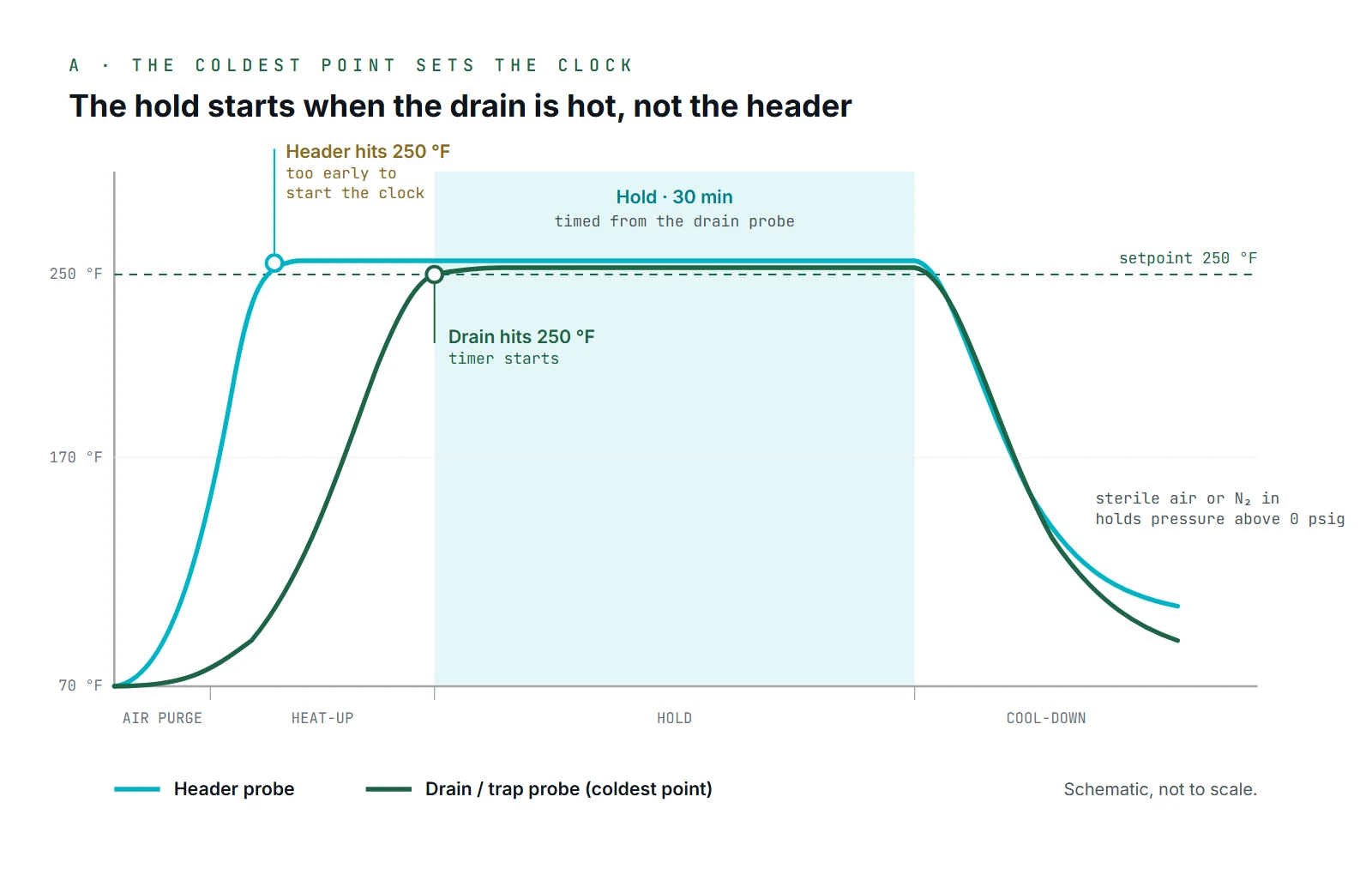
Cool-down gets less attention than it should. As steam condenses in a closed system, the pressure drops, and it can go below atmospheric. A system under vacuum pulls in air through any seal that will let it, and that air is not sterile. Breaking the vacuum with filtered gas is part of the sterilization, not housekeeping after it.
Air is the enemy
Air is the commonest reason SIP fails. A pocket of air at the end of a branch insulates the steel behind it, and steam simply won't displace it unless there's somewhere for the air to go.
Air mixed into steam is a quieter problem. A steam-air mixture at 15 psig is cooler than pure steam at 15 psig, because only the steam's share of the pressure counts. With 10% air by volume the mixture runs roughly 6 °F cooler, while the pressure gauge still reads what it should. That's one reason a probe at the coldest point carries more weight than a gauge at the header.
Air leaves the same way condensate does: downhill, through an open path. Which brings everything back to drainage.
Condensate has to leave
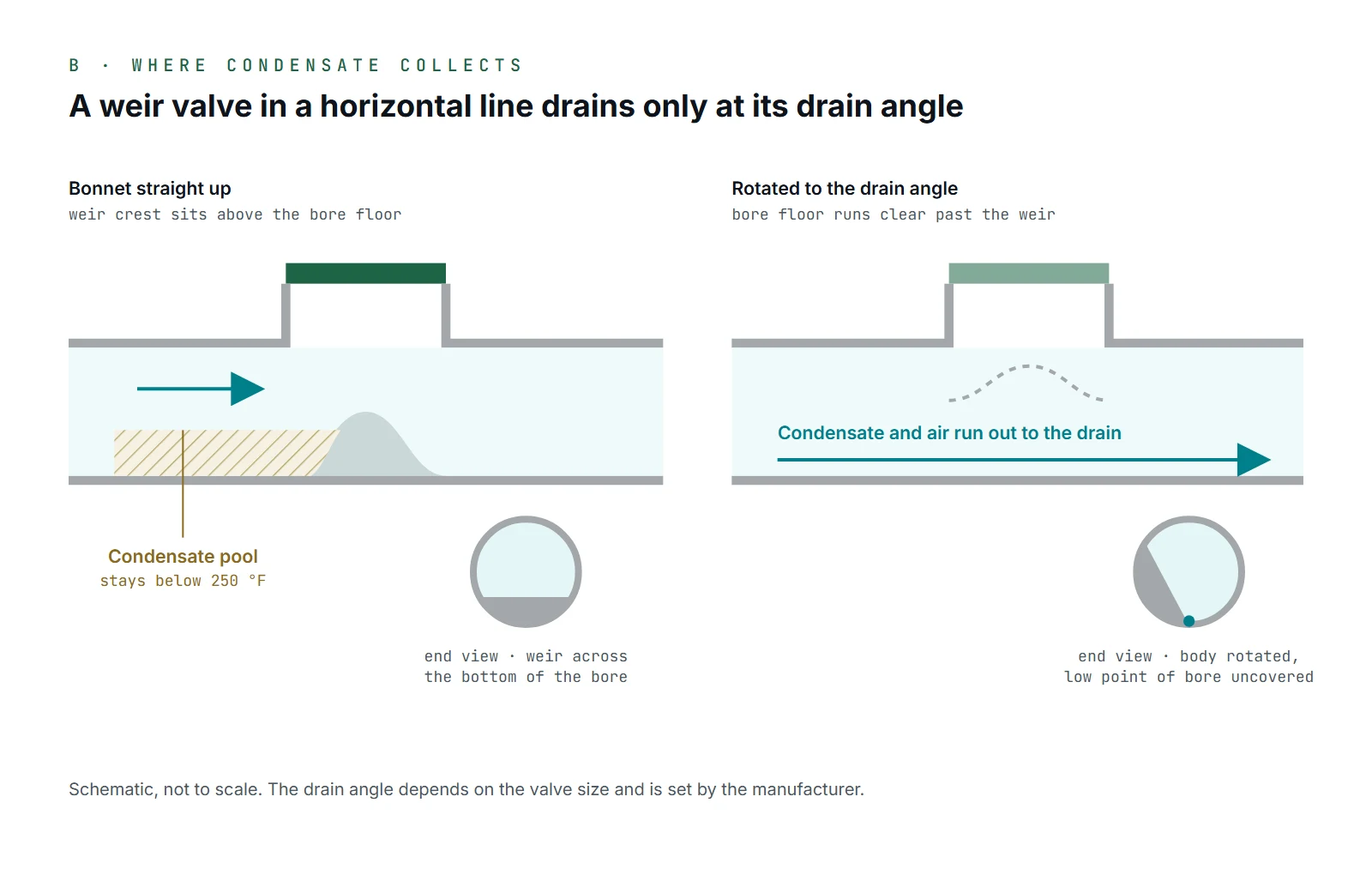
Every pound of steam that does its job turns into a pound of water. If that water can't drain, it pools at low points, cools, and sits between the steam and the steel it was meant to heat. A puddle at the bottom of a horizontal valve body can sit well below 250 °F for the entire hold.
Draining condensate is a design problem, decided long before the first cycle:
- Slope. Lines are pitched toward drain points. ASME BPE sets designated minimum slopes for this.
- Low-point traps. A steam trap or controlled bleed at each low point discharges condensate and air while holding steam back. A trap that fails closed waterlogs that section. A trap that fails open wastes steam but usually still sterilizes.
- Valve orientation. A weir diaphragm valve in a horizontal line only drains when the body is rotated to its drain angle, which the manufacturer specifies by size. Installed upright, the weir holds a pool on the upstream side.
- Temperature at the drains. Probes go at drain points and trap inlets, where condensate gathers, because those are the cold spots.
Dead legs and closed valves
A dead leg is a branch with no flow through it. In CIP the problem is that cleaning solution doesn't circulate into it. In SIP the problem is that air gets trapped at the closed end and condensate collects. ASME BPE defines dead legs as a ratio of branch length to diameter (L/D) and sets a target of 2 or less. The full definition is in CIP explained.
Closed valves create a related problem. A closed diaphragm valve isolates the two sides of the line, so steam admitted on one side does nothing for the other. Each side needs its own steam path and its own drain, or the valve has to be cycled during the hold so steam reaches both faces of the diaphragm. Sample valves and other points where the sterile boundary meets the outside world often get steam supplied straight through them for this reason.
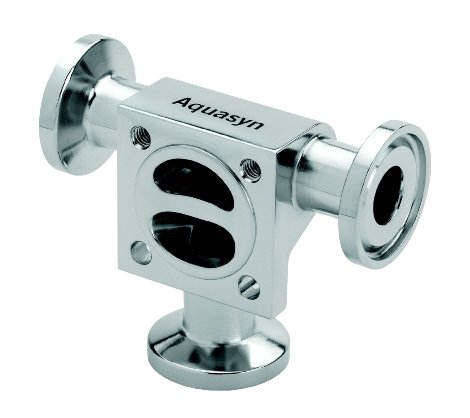
This is also where valve geometry earns its keep. Zero-static tees and multiport block bodies put the sealing point right at the main run, so there's no branch for air to sit in at all. Every weld and fitting they take out of the system is one less spot that has to be proven hot.
What SIP does to a valve
A valve on a line that's steamed daily goes from ambient to 250 °F or more and back, every day, under pressure. The metal doesn't mind. 316L stainless handles those temperatures easily, and electropolished surfaces stand up well to clean steam.
The diaphragm feels it. Elastomers take a compression set with every hot cycle and lose a little of their springback. PTFE-faced diaphragms cold-flow under load, and heat speeds that up. The result shows up at the bonnet joint, typically as a weep after a SIP cycle that clears as the line cools. The fix is to check the bonnet joint after the first SIP and inspect it on a schedule after that, not to keep cranking the bonnet down. Over-tightening a hot-cycled diaphragm crushes it and shortens its life.
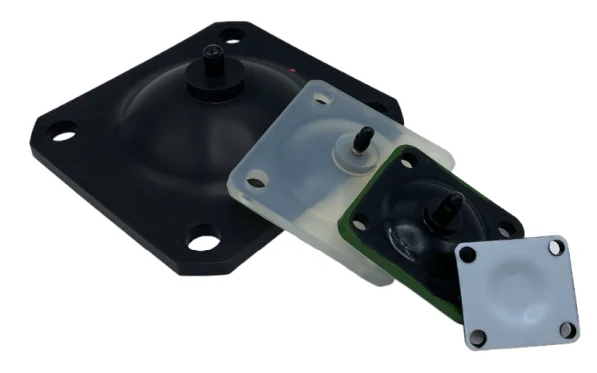
Diaphragm compound matters too. EPDM is the usual choice for steam service, and PTFE-faced diaphragms with an EPDM backing cover steam with harsher chemistry. Silicone and Viton degrade faster under frequent or superheated steam. Compatibility by compound is covered in the diaphragm materials guide.
Single-use flow paths are a different case. Tubing isn't steamed in place; it arrives pre-sterilized, usually by gamma irradiation, or is autoclaved. On a hybrid pinch valve, only the reusable stainless head goes through the autoclave.
How you know it worked
The routine evidence is the temperature record: every monitored point at or above setpoint for the full hold, with pressure consistent with saturated steam at that temperature.
Qualification goes further. During validation, thermocouples are placed at the expected cold spots and biological indicators, typically spores of Geobacillus stearothermophilus, are placed alongside them. If the spores are dead after the cycle, the cold spots got hot enough for long enough. The steam itself is tested for quality: non-condensable gas, dryness and superheat, usually against limits borrowed from EN 285.
Superheat deserves its own mention. Steam that has been throttled or overheated carries more heat than its pressure would suggest and behaves like a hot gas rather than condensing. It reads hotter on a probe and sterilizes worse.
Where SIP goes wrong in practice
- The hold timer starts on a header probe while a drain leg is still coming up.
- A trap fails closed and floods a low section.
- A valve is installed upright in a horizontal line and holds a pool behind the weir.
- A closed valve is never cycled, so one face of the diaphragm never sees steam.
- Cool-down pulls a vacuum, and the system draws in air through a seal.
- A line that didn't clean properly gets steamed anyway.
- A bonnet that weeps after SIP is tightened further each time, until the diaphragm fails.
Questions to settle before you specify components
- What temperature, pressure and hold time will the SIP cycle run, and how often?
- Is the steam pure steam (clean steam), and has its quality been tested?
- Which diaphragm compound is rated for that cycle, and what is the inspection interval?
- How will each valve be oriented, and does it drain in that position?
- Where are the dead legs, and can a zero-static or multiport valve remove them?
- Which valves are closed during the hold, and how does steam reach both sides?
How Aquasyn handles it
Aquasyn diaphragm valves are machined from solid 316L bar stock and are specified for steam service with EPDM or PTFE-faced diaphragms. Every manual bonnet is built on the Tork-Tite® mechanism, which uses hard stops to set diaphragm compression at a fixed point, so a weeping joint after SIP can't be cured by over-tightening it and crushing the diaphragm. How that works is covered in Tork-Tite® feet explained. If your SIP cycle runs hotter, longer or more often than usual, send the duty cycle to engineering with the enquiry and the diaphragm will be specified against it.
Frequently asked questions
What is SIP (steam-in-place)?
SIP is a method of sterilizing installed process equipment by filling the closed system with saturated steam and holding every surface at or above a set temperature, typically 250 °F (121 °C), for a defined time, without taking the equipment apart.
What temperature and time does SIP use?
Most cycles hold at least 250 °F (121 °C) for 15 to 30 minutes, measured at the coldest point in the system. Some run hotter, around 266 to 274 °F (130 to 134 °C), for shorter holds.
What is the difference between CIP and SIP?
CIP cleans: it removes soil with chemistry, heat and flow. SIP sterilizes: it kills microorganisms with saturated steam. SIP runs after CIP, because steam can't sterilize a surface still covered in soil.
Why does SIP fail?
Usually because air or condensate keeps steam from reaching part of the system. Trapped air at dead legs, pooled condensate at low points, failed steam traps, closed valves that are never cycled, and a vacuum during cool-down are the common causes.
What is F0 in steam sterilization?
F0 is the lethality of a sterilization cycle expressed as equivalent minutes at 250 °F (121.1 °C). Time spent below that temperature counts for much less: each 18 °F (10 °C) drop cuts the contribution tenfold.
Which diaphragm material is best for SIP?
EPDM is the common choice for steam service. PTFE-faced diaphragms with EPDM backing suit lines that also see aggressive chemistry. Silicone and Viton wear faster under frequent or superheated steam.
Keep reading
SIP only works on a line that is already clean. The CIP note covers cleaning: the four factors, flow by tube size, and dead legs.
CIP explained